
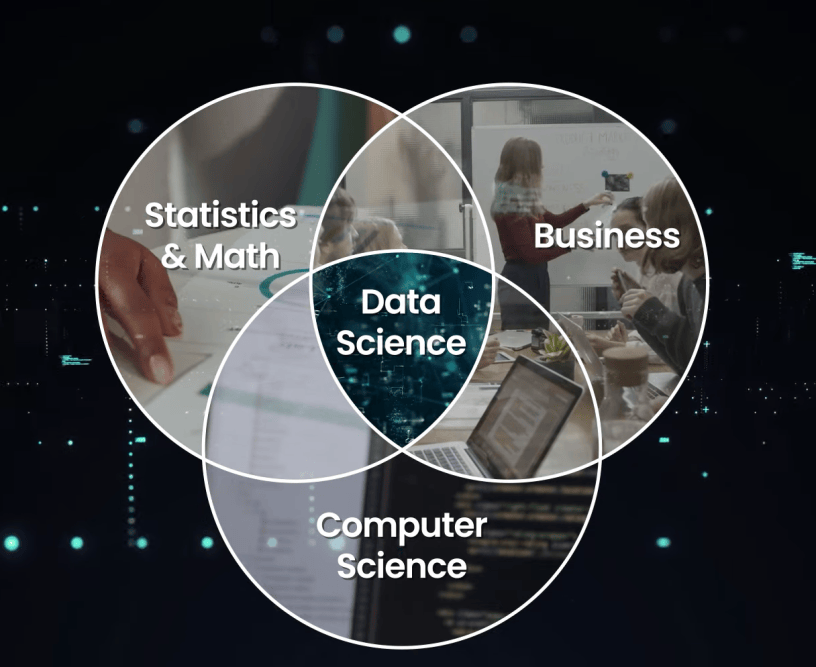
In this knowledge article we will understand what data science from a data scientist perspective. What data scientist do and how they differentiate the data.
Introduction:
Data Science is not about making complicated models, it’s not about making awesome visualizations and it’s not about writing code.
Data science is about using data to create as much impact as possible for your company. Now, impact can be in the form of multiple things.
It could be in the form of insights in the form of data products or in the form of product recommendations for a company.
Now to do those things, you need tools like “making complicated models” or “data visualizations” or “writing code”.
But essentially, as a data scientist your job is to solve real company problems using data and what kind of tools to use, we don’t care.
There’s a lot of misconceptions about data science, and this is because there’s a huge misalignment between what’s popular to talk about and what’s needed in the industry.
History of Data Science:
Before data science, we popularized the term data mining in an article called from data mining to knowledge discovery in databases in 1996, in which it referred to the overall process of discovering useful information from data.
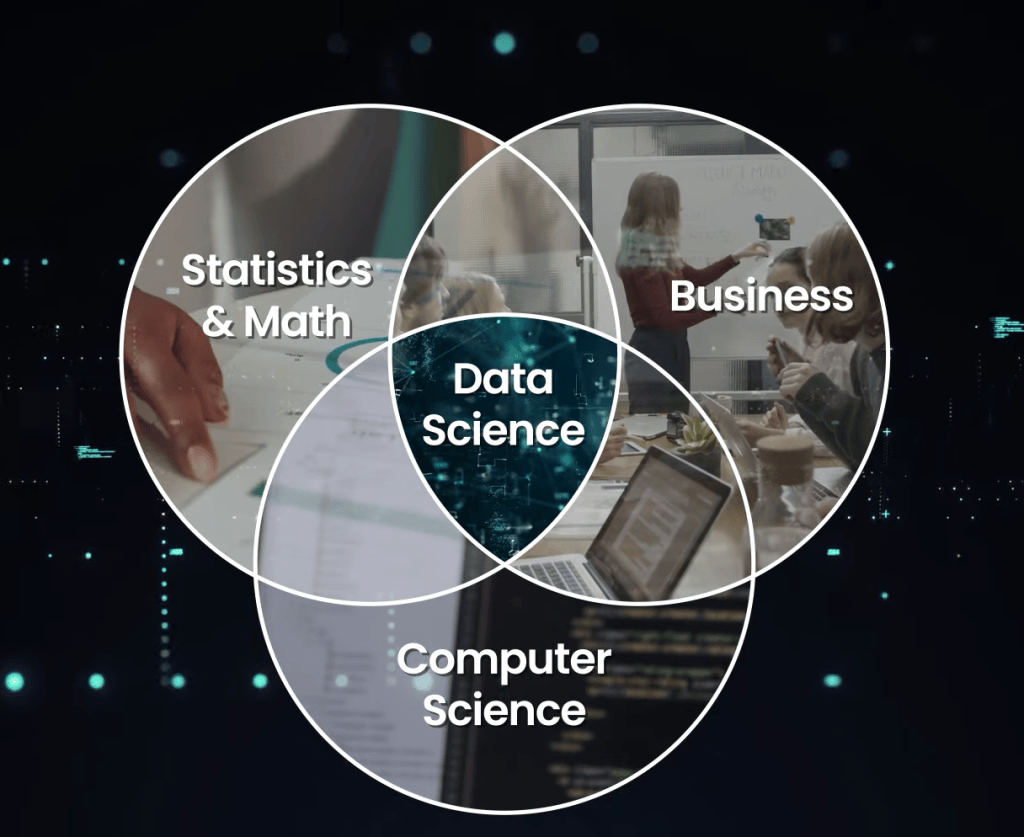
In 2001, William S Cleveland wanted to bring data mining to another level. He did that by combining computer science with data mining.
Basically, he made statistics a lot more technical, which he believed would expand the possibilities of data mining and produce a powerful force for innovation.
Now you can take advantage of computer power for statistics, and he called this combo “Data-Science” around this time.
This is also when we emerged, where websites are no longer just a digital pamphlet but a medium for a shared experience amongst millions and millions of users.
Evolution:
These are websites like Myspace in 2003, Facebook in 2004 and you too in 2005. We can now interact with these websites, meaning we can contribute, post, comment, like upload, share, leaving our footprint in the digital landscape.
We use internet, help create and shape the ecosystem we now know. Today that’s a lot of data, so much data that it became too much to handle using traditional technologies. We called this big data.
That opened a world of possibilities in finding insights using data. But it also meant that the simplest questions required sophisticated data infrastructure just to support the handling of the data.
We needed parallel computing technology like Map reduce and spark. The rise of big data in 2010 sparked the rise of data science to support the needs of the businesses to draw insights from their massive, unstructured data sets.
The Journal of Data Science describes data science as almost everything that has something to do with data collecting, analyzing, modelling.
This made evolution of Machine Learning. In 2010, with the new abundance of data, it made it possible to train machines with a data-driven approach rather than a knowledge driven approach.
All the theoretical papers about recurring Nero-Networks support vector machines became feasible, something that can be achieved through Machine Learning.
So this is Data Science, Read our other articles on Algorithm here.

