

1. Introduction
The quicksort algorithm is a sorting algorithm that is used to sort a list of items. It is a divide and conquer algorithm that works by dividing the list of items into two smaller lists, and then sorting each of the smaller lists.
The quicksort algorithm is a very efficient sorting algorithm and is used in many applications. It is a stable sorting algorithm, meaning that it preserves the order of items that are equal.
The quicksort algorithm is a recursive algorithm, meaning that it calls itself on smaller lists of items until the list is sorted. The quicksort algorithm has a worst case complexity of O(n^2), but its average case complexity is O(n log n).
This article will explain how the quicksort algorithm works. It will begin with an introduction to the algorithm, and then will explain the steps of the algorithm in detail.
2. The QuickSort algorithm
The quicksort algorithm is a recursive algorithm. This means that it calls itself on smaller lists of items until the list is sorted.
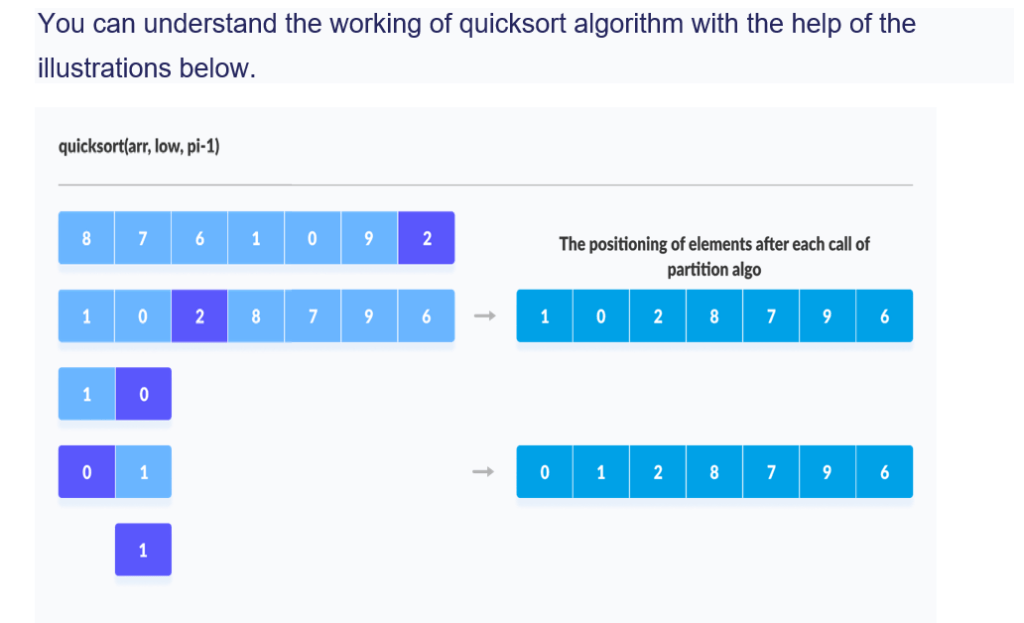
The basic idea of quicksort is to select an element in the list called a pivot element. This element divides the list into two sub-lists, one with elements smaller than the pivot element, and the other with elements that are larger than the pivot element. Each of these sub-lists is then sorted using the same process until all the items in the list are sorted.
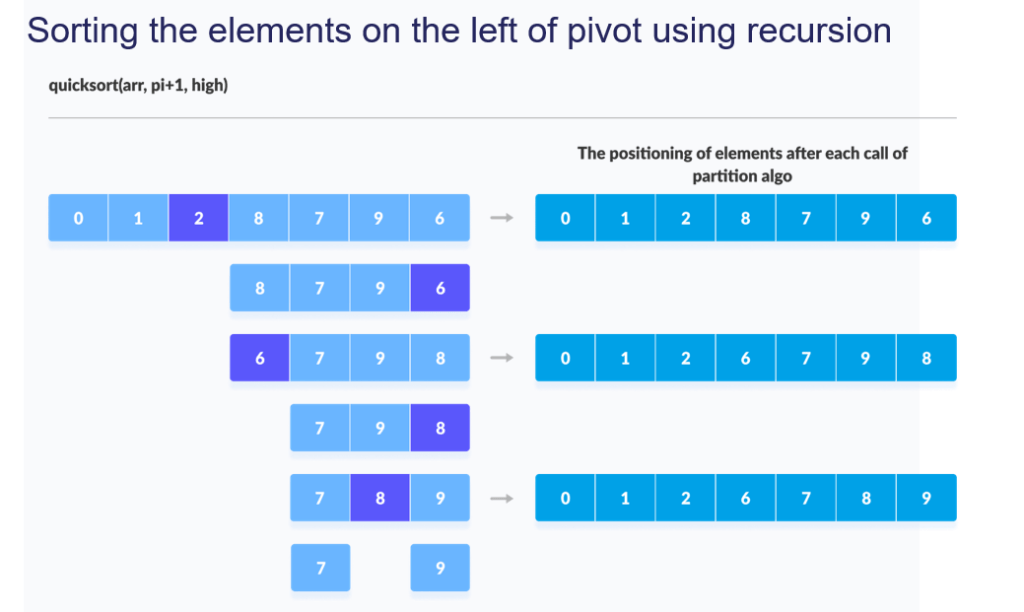
The quicksort algorithm works by picking a pivot element and arranging the list so that all the elements that are less than the pivot are placed before it and all the elements that are greater than the pivot are placed after it. The pivot element is then placed in its final position and the list is divided into two parts: a left part and a right part. Then the quicksort algorithm is recursively called on both the left and right parts of the list until the list is completely sorted.
The quicksort algorithm has a worst case complexity of O(n^2). This means that the time it takes to complete the algorithm increases as the size of the list increases. In the average case, however, the complexity of the algorithm is O(n log n). This means that the average time it takes for the algorithm to sort a list of items is proportional to the logarithm of the size of the list.
3. How the quicksort algorithm works
The quicksort algorithm starts by randomly selecting a pivot element from the list of items to be sorted. All the elements that are less than the pivot element then become the left sub-list and all the elements that are larger than the pivot element become the right sub-list.
The quicksort algorithm then sorts the left sub-list by selecting a new pivot element from the left sub-list and dividing the list into two new sub-lists. This process is repeated until the left sub-list is sorted. The same process is then repeated for the right sub-list.
When both the left and right sub-lists are sorted, the quicksort algorithm combines the two sub-lists, along with the pivot element, into a single sorted list. This entire process is repeated until the list is completely sorted.
Overall, the quicksort algorithm is an efficient sorting algorithm that is easy to implement. It has an average complexity of O(n log n) which makes it faster than many other popular sorting algorithms. The quicksort algorithm is especially well suited for sorting large lists or lists with many elements.
4. Why the quicksort algorithm is so efficient
The quicksort algorithm is an efficient sorting algorithm for a few different reasons. First of all, it does not require additional storage, making it ideal for working with large datasets. Secondly, it is extremely quick and takes advantage of parallelism, enabling it to complete the sort much faster than other sorting algorithms. Additionally, it is also relatively simple to implement due to its recursive nature, which means it can be easily applied to different types of data.
Furthermore, the quicksort algorithm is also much more efficient than other popular algorithms, such as merge sort or insertion sort. This is because the quicksort algorithm relies on a Divide and Conquer approach which means that the list is divided into smaller chunks and then the elements are sorted according to the pivot element. This approach minimizes the amount of work that the algorithm has to do in order to complete the sort.
Overall, the quicksort algorithm is one of the most efficient sorting algorithms available, thanks to its quick execution time, simple design, and lack of additional storage requirements. This makes it ideal for working with large datasets or for applications where time is of the essence.
5. Quicksort in action
Now that we understand the principles behind the quicksort algorithm, let’s take a look at how it works in action. Generally speaking, the quicksort algorithm will consist of three main steps:
1. choosing a pivot element
2. Partitioning the array around the pivot
3. Recursively sorting the sub-arrays
To choose the pivot element, the algorithm will usually choose the first element in the array. The reason for this is that it helps to minimize the time required to partition and sort the array.
Once the pivot element is chosen, the partitioning step is performed. This is done by looping through the array and placing the elements on the left side of the pivot if they’re less than pivot and to the right side of the pivot if they’re greater.
Finally, the last step is the recursive sorting. This is done by applying the same sorting process to the two sub-arrays created during the partitioning step. Once both sub-arrays have been sorted, then the algorithm is complete.
6. To sum things up
The quicksort algorithm is a classic example of a divide and conquer sorting algorithm. By using this approach, the algorithm is able to quickly sort arrays of data which can have thousands of elements. This is made possible by its recursive nature which helps to reduce the complexity of the sorting operation. In addition, by partitioning the array, the algorithm is able to take advantage of already sorted elements which can make it much more efficient than other sorting algorithms.
Overall, the quicksort algorithm is an incredibly practical and efficient sorting algorithm that is perfect for medium to large datasets. By following the three simple steps of choosing a pivot element, partitioning, and recursively sorting, developers and data scientists can quickly sort the elements they’re dealing with.
Hope you liked our Tutorial, leave comment on page for us to work better. Please read our other articles here

